
 Deutsch
News / Blog
Which thread is the right one?
Nov
Choosing the right thread is crucial for the optimal attachment of your anode! 💡 Whether metric or imperial – both variants have their own special features.
Metric or imperial? 🔍 A typical example of a metric thread is M10 x 1.5 – where “M10” stands for the diameter in millimetres and “1.5” for the pitch in millimetres per revolution.
An imperial thread would be e.g. 3/8” UNC – here ‘3/8’ denotes the diameter in inches (i.e. 3/8 inch or approx. 9.525 mm), and ‘UNC’ stands for the Unified National Coarse thread profile with a coarse thread pitch.
Pitch 📏: The pitch indicates how far the thread turns in with each revolution. With an M10 x 1.5 thread, the screw moves 1.5 mm into the material per revolution. A finer pitch, such as M10 x 1, means only 1 mm feed per revolution – ideal for more precise and tighter connections.
For inch threads, the pitch is specified in threads per inch (TPI), i.e. the number of threads per inch. For example, a 3/8″-16 UNC thread means that there are 16 threads per inch. A higher TPI number corresponds to a finer pitch and a more precise setting per revolution.
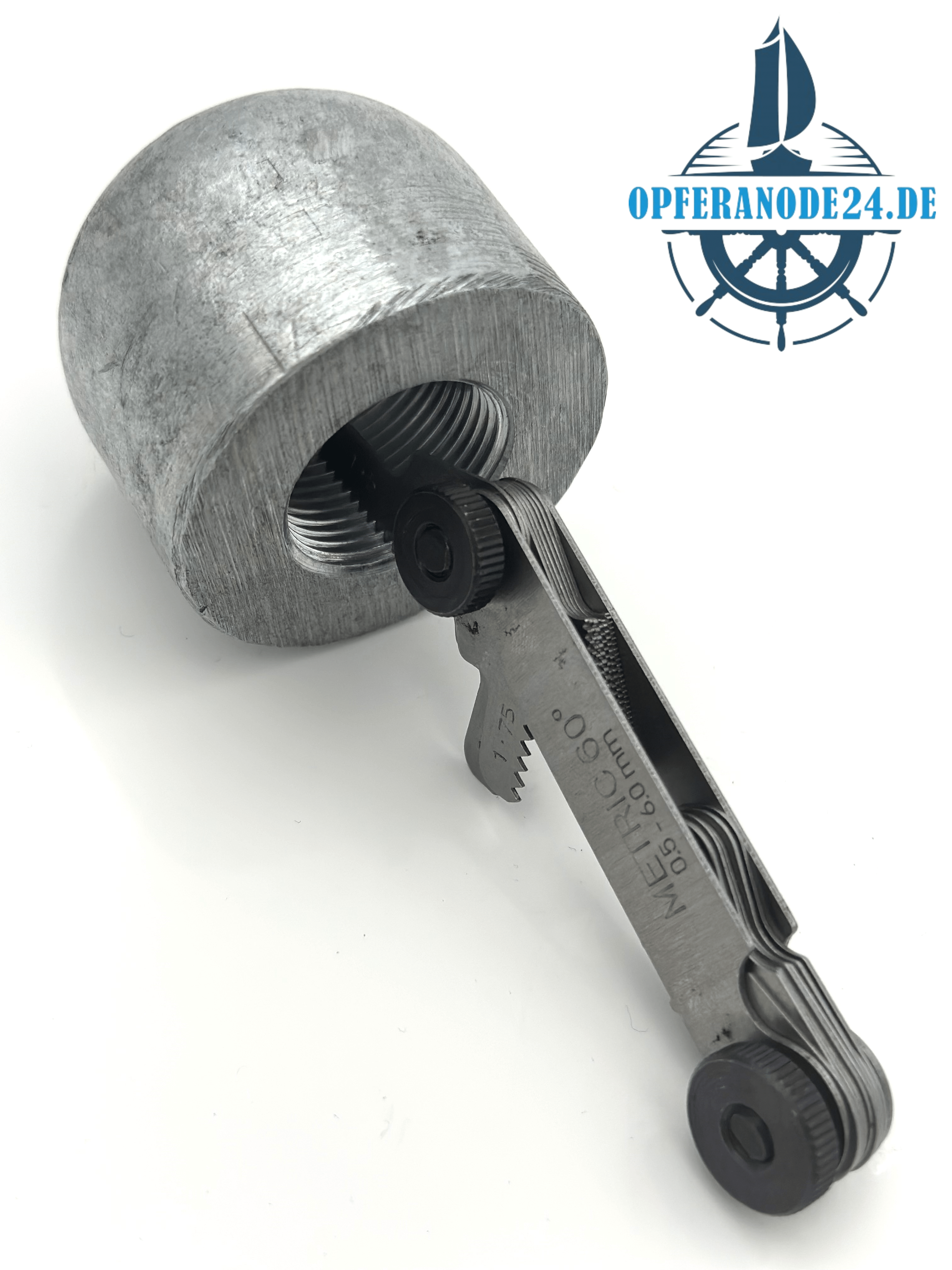
Tip: To determine the exact thread type and pitch, use our thread gauge from the online store, for example. This allows you to easily determine the correct dimensions for metric and imperial threads and avoid measuring errors.